Wreck Diving Aboard D/V Tenacious!
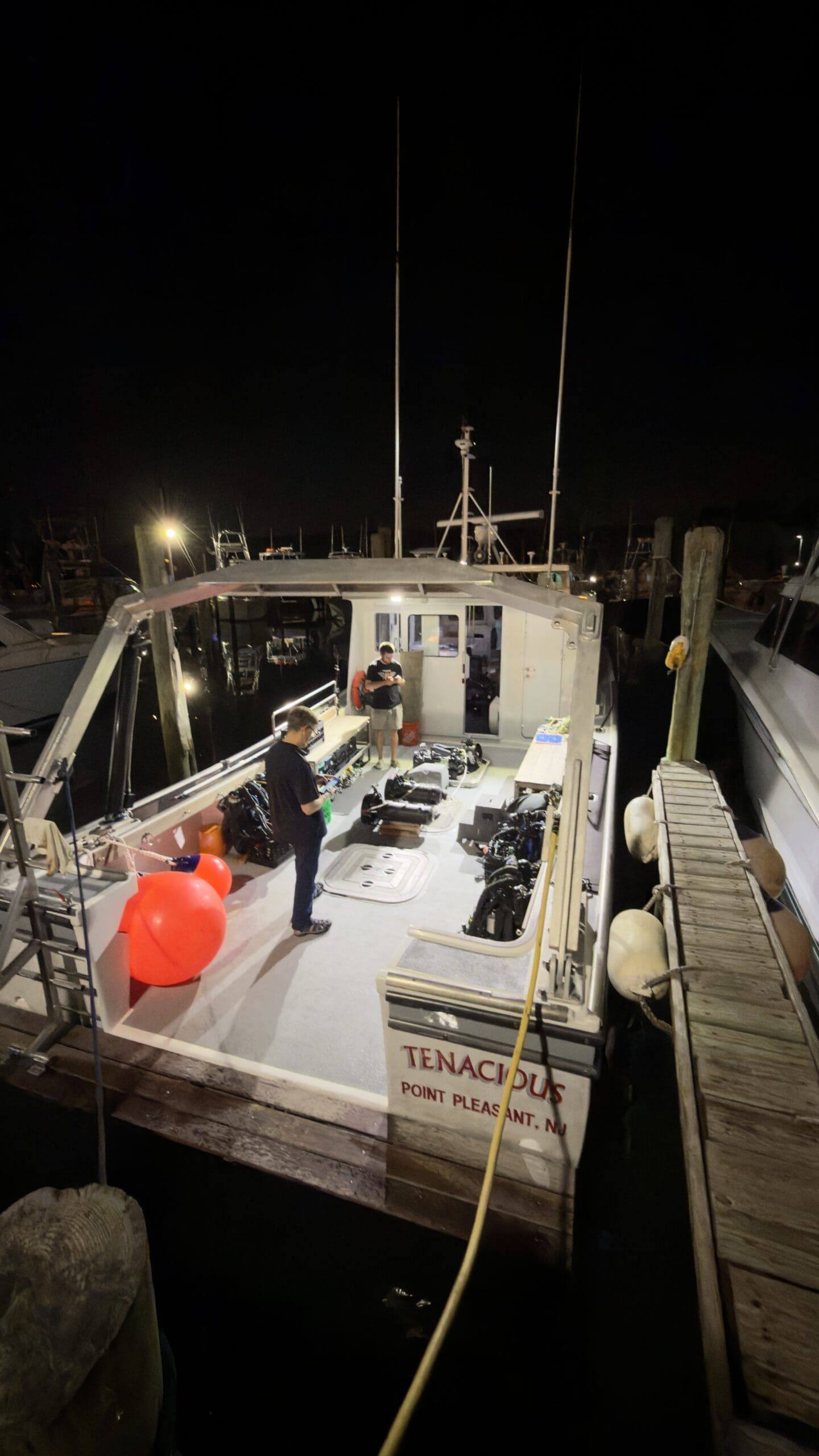
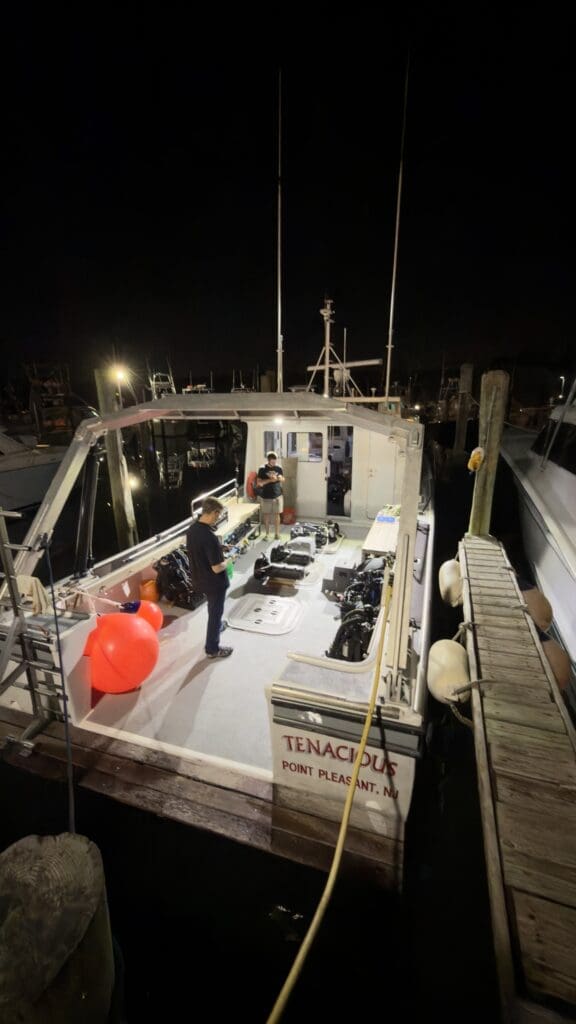
I began my journey down south on the 10th of July. After seven hours, several missed turns, yelling at Google Maps for rerouting me into New York City, and a stop at the Jon Bon Jovi truck stop (because that’s a thing), I finally reached New Jersey, where I would join Jennifer Sellitti, Boston Sea Rovers Associate and Captain of D/V Tenacious. The D/V Tenacious is a 45’ NOVI-built vessel that was originally built as a fishing boat. Their company, Atlantic Wreck Salvage, has turned the boat into a highly optimized diving vessel featuring advanced sonar and radar, an open back and dive ladder, an A-frame that they can use to bring up heavier artifacts, and, most importantly, a well-furnished galley!
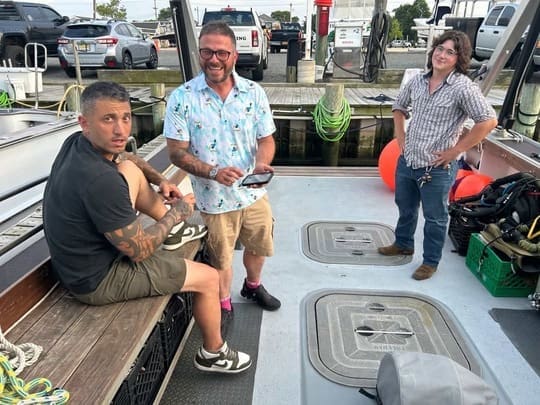
With being this far into the internship, I’ve somewhat grown accustomed to this vagabond lifestyle. I’ve figured out how to sleep pretty much anywhere, tasted most of the beef jerky brands that truck stops offer (Old Trapper is the best), and, most importantly, how to survive on a few hours of sleep and a whole lot of caffeine (all this caffeine won’t ever catch up to me… right?). Anyways, back to the boat. I joined Jennifer Sellitti, former Sea Rovers intern and Black Badge holder Rick Simon, and a few other well-seasoned Tenacious divers. What’s most apparent upon arrival is how tight-knit the group is. Years of history and shared diving experience have made a hearty crew. I found my bunk and received a safety briefing on the boat and its different safety features.
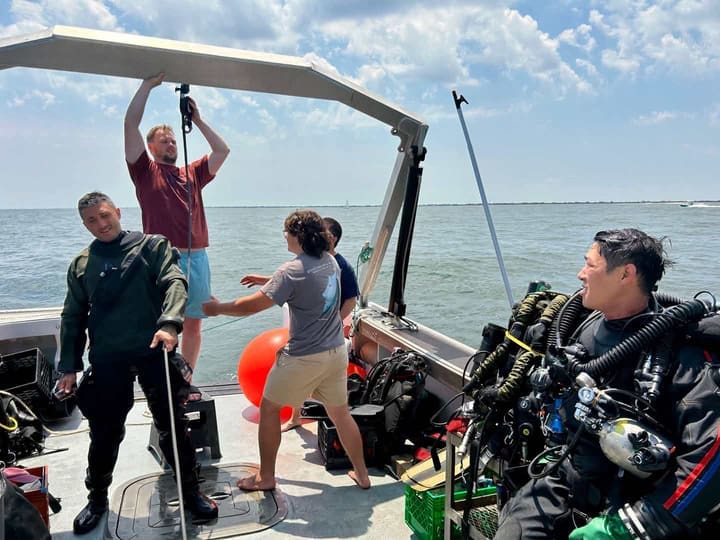
After returning from dinner, we set off for our dive site. After a six-hour journey through the night, we reached the Bidevind. The Bidevind was a 414-foot German-built tanker that was sunk by a German U-boat (U-752) on April 20, 1942. The tanker now rests 75 miles offshore in 190 feet of seawater. For these dives, I would be surface support. I stayed topside with Jennifer, and she taught me about the different systems they have onboard and how they work, such as the Carolina rig system. I learned its uses for long deco stops and how to deploy it. This trip acted as my first glance into the technical diving world. All the divers for this dive were on rebreather systems, and it was really neat to be able to watch them go through their checklists when setting up their rebreathers.
Rebreather diving unlocks a lot of new opportunities for divers. You’re able to stay down longer due to the recycling of your exhausted gas. This unlocks deeper depths, which means more time on a wreck. While I’m not quite ready to hop on a rebreather, the thought of eventually becoming rebreather-certified is exciting to me, and I’m excited to do more training in the technical diving world.
After a surface interval, the divers returned for a second dive, and afterwards we headed back to the dock for the night. The next day, we had a changing of the guard. Rick Simon returned home, as well as a few others, and we got a few more divers onboard. Today I would be able to dive the wreck. Due to weather keeping us closer to land, Jennifer decided on the SS Delaware, a 250’ long steamer that caught fire and burned to the waterline in 1898. It now rests at 75 feet and features a prominent engine and boiler that, for its age, still stand fairly intact. Glassware, pennies, hardware, clothes, and shoes have all been found on the wreck.
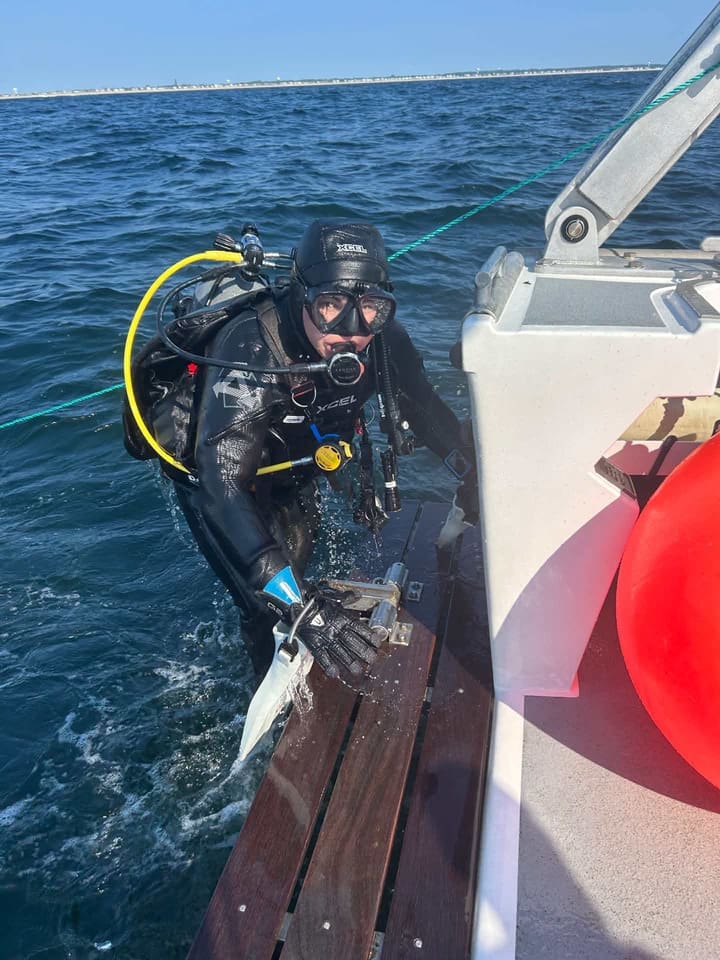
I had that in mind while setting up my dive gear, looking at maps of the wreck with marked locations where different items had been found, hoping that I might be lucky enough to find an artifact or two. My dive partner, Jeremy, and I began our descent, first holding onto the Carolina rig (a horizontal line set at typically 30 feet to assist divers with deco stops), then following the anchor line down. The shot line put us about 40 feet in front of the engine. We first moved to the stern section, following the engine shaft as we went. After looking around for a few moments, we decided to head towards the bow. The conditions were quite good, so we were able to see the outline of the wreck well.
Upon reaching the bow, we began to fan in the sand for any artifacts. After searching for about three minutes, my hand touched something round and metallic. “A coin!” I shouted through my reg. But… the sand began to settle, and my excitement shrank as I realized the coin-shaped object in my hand was actually a fishing lure. We spent some more time searching to no avail and decided to start heading back to the surface so as not to rack up any decompression time. During my internship, I’ve been using a Shearwater Peregrine, gifted to me by Rick Simon and Dive-On-It Scuba. This dive computer is top of the line, and with all of the training and diving I’ve been doing, it really helps give me a comprehensive understanding of the utility of gas mixtures and how they apply to decompression diving.
We then helped the next shift of divers prepare for their dive. The divers headed down, and an hour later they were back, this time with loot. Chris Ogden brought up a spike so big we needed to use the A-frame and winch to be able to pull it out of the water. Jennifer made it a point to tell Chris that there was no way that thing was going to scratch her boat. It took all hands to safely get the spike up and onto the boat. After a lot of shouting and bated breath, we got the spike onto the boat without damaging Tenacious.
We returned to the dock and scrubbed down the boat before saying our goodbyes. I was so incredibly fortunate to receive the invitation to join Jennifer Sellitti aboard D/V Tenacious. I really had a great time above with the crew, and diving below was fantastic too! I am beyond grateful to be able to learn and experience so much through the Boston Sea Rovers Internship. I really hope I can one day find a suitable word to describe how much this internship has meant to me. Grateful seems to be too light of a word. Perhaps indebted would be more suitable.
The connections I’ve made thus far in the internship will hopefully last me the rest of my life. Maybe right now I say I understand what that means, but I think, in reality, the full weight of those connections will really hit me when I’m fresh out of college and need to phone a friend for a favor. I think people sometimes forget that behind the amazing symposium they attend, behind the talks and film festivals, is a group of divers who have come together for a greater purpose than themselves. They come together and uplift one another when needed. They provide a helping hand to young people trying to get into the industry.
It is no overstatement to say that this internship has and will continue to change the trajectory of my life. And for that, I am forever indebted to the Boston Sea Rovers. I look forward to this coming March when I get to pass the torch to the next intern!