The beginning! A few days at Woods Hole Oceanographic Institution!-Zac Carvalho
June first came by far quicker than I imagined it would. The wait to start the rest of my life was over, and now came the actual living part. I graduated on May 29th, and June 1st was the first day of my Boston Sea Rovers Internship.
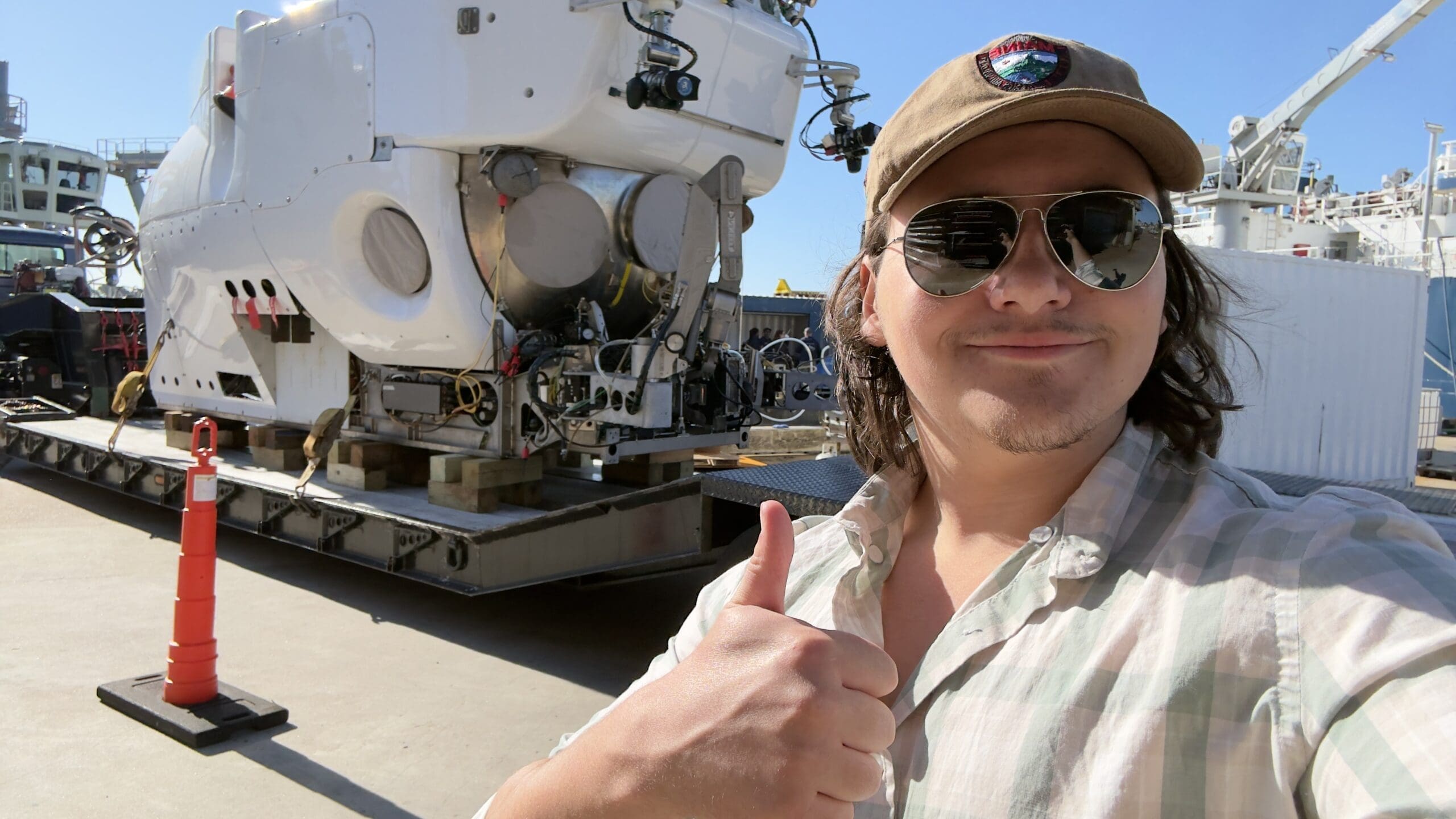
This week, I traveled down to Woods Hole Oceanographic Institute (WHOI), where I met up with dive safety officer and Boston Sea Rovers President Kim Malkoski. This first week of the internship is dedicated towards making sure the intern has all of the basic skills and requirements to be successful (and safe) during the course of their internship. Because I am in pursuit of my advanced open water, nitrox, and rescue diver certifications, I was able to join in on a WHOI-taught scientific diver class. The first part of the morning was a lecture from Ed O’Brien. Ed is a thoughtful and well-experienced instructor who cares not only about teaching the information but also about making sure all students in class have a solid understanding of the information being taught. The first lecture was on dive physics. We covered all the different laws and physics behind diving, and Ed used many comprehensive graphics and models to better allow us to understand the material. After our class broke for lunch, I headed over to “Pie in the Sky,” a famous bakery down here at Woods Hole. If I could give you any advice at all in this life, it is to go there and get yourself a key lime pie. Now I know you’re thinking, “Well, I don’t need a whole pie.” False, you need two whole pies, one for you, and one to bring home to your family so they know you’re not lying when you tell them how good it is. After lunch, we headed over to the dive tank for in-water training. While most of the skills we practiced were review from Open Water training, I realized just how imperative it was to practice these skills in controlled conditions. That way, when they happen for real, all you have to do is remember your training. It had been a while since I practiced mask removal underwater. Ed demonstrated the skill in the pool, then pointed to me to practice it. I took off my mask, and at that moment, I remembered how much I hate it when the bubbles I’m exhaling hit my eyes. That, combined with my wet mop of a hairdo floating around me caused me to start to panic a little. But again, all you have to do is remember your training. I am trained to stop, think, act; and that’s exactly what I did. I reminded myself, “hey you’re in a 15ft pool, there’s really no danger here,” and I was able to pull the mask over my eyes and clear just like I had done so many times before. By the end of the session, I was swimming across the pool with no mask while my buddy was breathing. It’s the skills or situations that don’t happen often that we need to practice the most. (This is a really good segway into what we learned on day three. Risk and risk aversion in our rescue diver class. But I’m getting ahead of myself. After finishing up at the dive tank, I joined the Malkoski family at home, and we went out for dinner.

Day two was decompression theory taught by Giorgio Caramanna. He was fantastic at presenting information and bringing in real-world situations to put things into perspective, besides having a fantastic Italian accent that made learning from him that much better. He was able to apply the somewhat abstract ideas of decompression theory into a real-world example. This could come in the form of the classic balloon example, or using real-world accidents and seeing what we could learn from them. In the afternoon, we returned to the dive tank for more water practice. This time, we practiced many different rescue diver skills and techniques, like how to deal with a panicked diver, how to stabilize an unconscious diver, and how to get them to safety. I also got to model some very nice undergarments provided to me by Fourth Element. Fourth Element was kind enough to provide the J2 base layer, the Xerotherm tops and bottoms, Arctic socks, Halo AR gloves, and even a beanie!
The third day’s class was on rescue diver techniques as well as risk, liability, and all the fun legal stuff. We went over how to identify different issues before they occur and how to treat them when they do occur. After class, I got the opportunity to meet with Dr. Roger Hanlon.
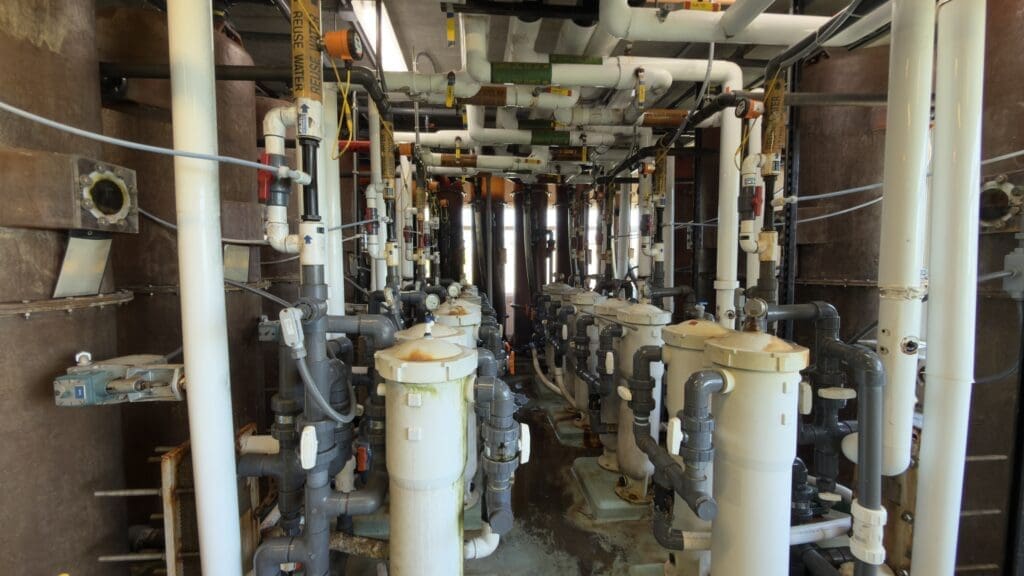
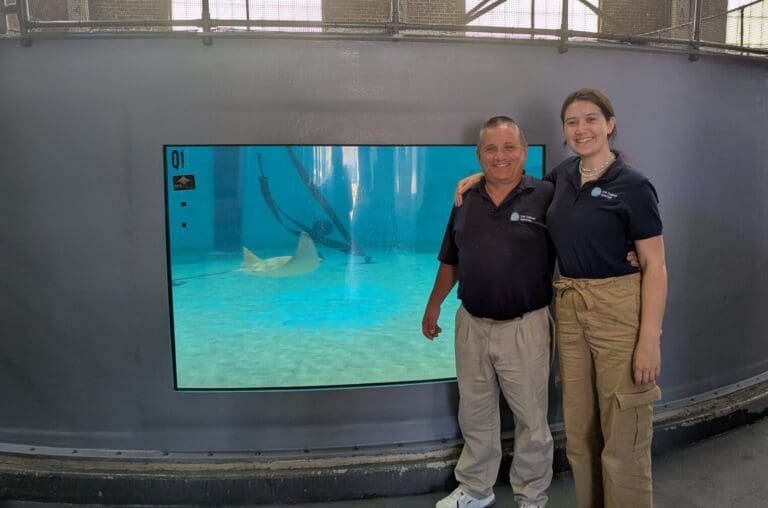
Getting to meet with Dr. Hanlon was fantastic. For those of you who are not acquainted, he is an award-winning ethologist (someone who studies animal behavior) and the lead senior scientist at the Marine Resources Lab. Dr Hanlon and I talked for quite some time, discussing everything from how octopuses use chromatophores, iridophores, and leucophores to change their color and blend into their environment to our favorite rugby teams. Much like I, Hanlon has a fondness for black and white photography. A framed poster of an Ansel Adams piece hangs above his desk. On the opposite side of the room is a collection of his work. All black and white, film, of course. We discussed the lengthy process of dark room work and how film is a much more physical and labor-intensive process than digital. After our talk in his office, I was given a tour of the lab. A collection of touch tanks and aquariums houses octopuses and cuddle fish- all named by his staff. Notable ones include “Sauoran” and “Johnny Bravo”. Something that I was incredibly impressed by was the lab’s ability to manufacture any type of water needed. 8 tubes that span the entire height of the 3-story building are able to change their attributes to recreate any water from any location in the world (see photo left). They use this to create optimal habitats for their specimens.
Dr. Hanlon is a thoughtful and conscientious man who understands his work cannot be siloed. Such work is too important for just one person or lab. While Hanlon is at the top of his field, he understands that there is still plenty he doesn’t know. This is why his subjects of research are spread out among several different universities and labs. He commented on how the ability to use the internet and online web meeting platforms such as Zoom has increased the productivity and effectiveness of his work.
During our meeting, Dr. Hanlon gave me a brief insight into a portion of his well-lived life. He spoke about being discharged in Korea as an army officer, then hopping aboard a boat headed to the Philippines, working for his fare. Upon arrival, pure chance led him to find an American ship whose crew was filming an underwater documentary. He did not allow this opportunity to go to waste and joined the filming crew for a few months. I thought to myself that there is a lesson to be learned here. What if Dr. Hanlon chose to go back home? What if he never took the first step? Where would he be today?
You and I could go down the series of events, the thousands of decisions we cautiously or subconsciously make daily. We could waste time asking ourselves how things could have been different. Or, we could learn from Dr. Hanlon. We too can take the first step. We can seize the opportunities that are provided to us, or we can go out there and find them ourselves. We must take the first step to fill our lives with opportunity and take a chance. This is in part why I pursued the Boston Sea Rovers internship. Because I’ve been fortunate enough to watch other interns go through the internship, I understand what opportunities and connections are made available to them. The door is built and somewhat tailored to the intern’s interests, but it is up to the intern to choose in what manner they decide to walk through it.
You and I only have one shot at this life; we would be doing ourselves and the world a disservice to not make the most of it.