Adventures in the New England Aquarium!
Sunday:
After a train ride into North Station a short 20 minute walk brought me to the doors of the New England Aquarium (NEAQ) where I met up with Dan Dolan, a long-time volunteer for NEAQ and friend of the Boston Sea Rovers. Dan gave me the run down of how the coming week would go during a tour of the aquarium before business hours. Growing up in New England and being in an aquatic based family, I was no stranger to the New England Aquarium. But I knew this experience would differ from the times I would visit as a kid. This time I got to peer behind the curtain and see all the work that has kept such an amazing aquarium going for the past 57 years.
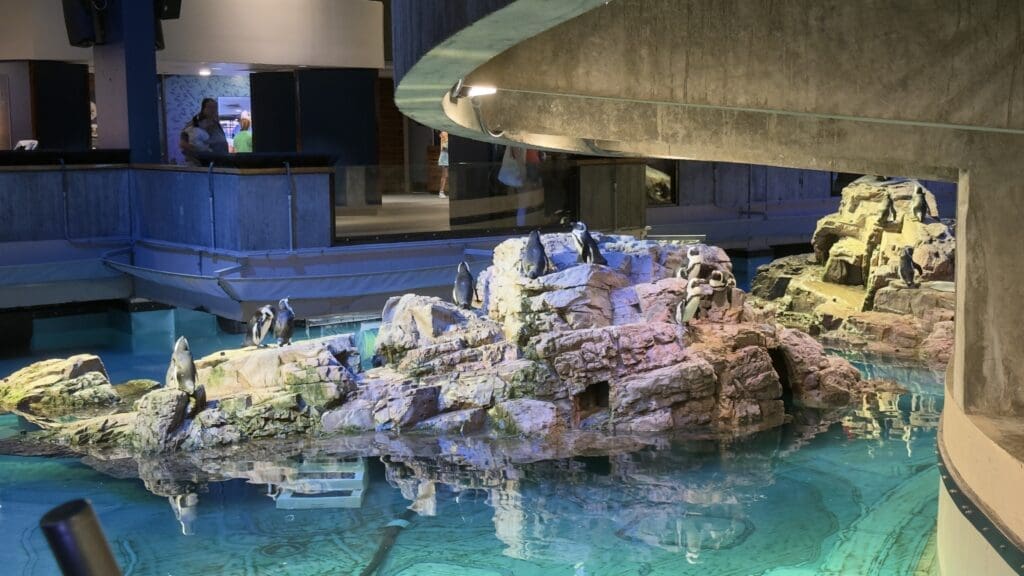
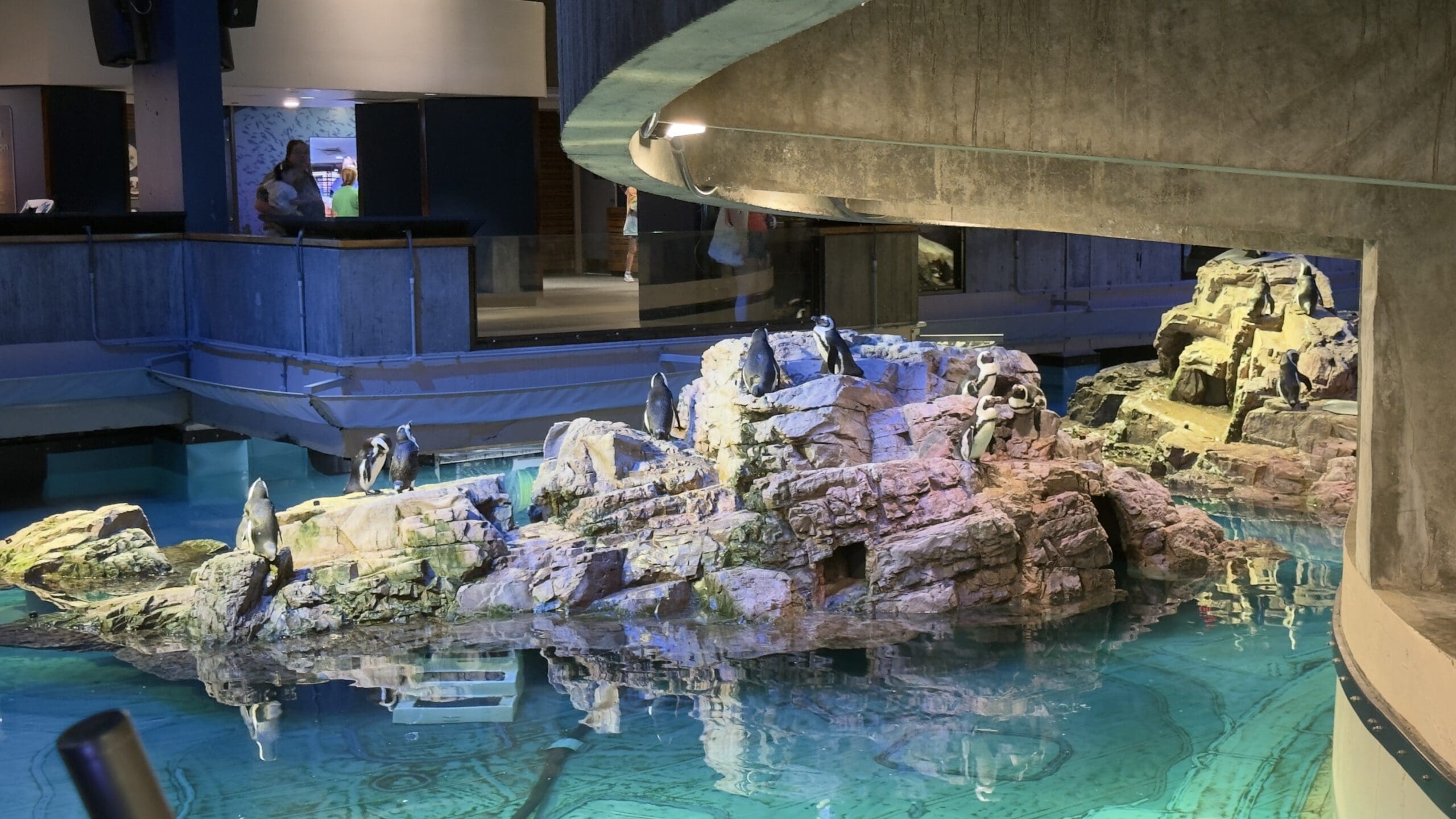
I started off working with the Penguin Department. They take care of one of the most prominent exhibits in the aquarium that houses both Rock Hopper and African penguins. The feed for this morning had already been prepared so I joined the aquarists for the first feed of the day. We waded out into the 50 degree water. Emily, the aquarist I was shadowing, would feed the penguins and I would mark them off on the clipboard. All of the penguins have an arm band that is used to identify them. If the arm band is on their right wing the penguin is a female. On the left, it’s a male. After years of working with them, Emily is able to identify every penguin from memory alone. For taking care of 38 penguins that’s pretty impressive. Emily would shout out the type of fish, the name of the penguin and if there were any medicines or vitamins in the fish. It would be my job to then find the right name on the clipboard and mark it off as well as tally the type of fish and amount of fish each penguin got. This is to track eating habits and make sure each penguin is getting a diversified feed. After an hour and a half feeding session, we returned to the penguin office, warmed up and prepared for the next feed. During the in-between time of prep work I talked to the members of the penguin department about their favorite part of the job. Some talked about how much they enjoy teaching guests, others talked about how much fun the penguins were to work with. I learned that a lot of the penguins only feel comfortable eating from certain Aquarius hands. Each penguin has a personality so distinct that well-seasoned aquarists in the penguin department can tell the penguins apart just by how they act! During the afternoon feeding we sat on the retirement island. Here geriatric penguins get to enjoy medicare benefits, and by that I mean more frequent attention from the aquarists. One the penguins here had pressure build up behind one of their eyes and it was causing it a lot of discomfort. Because of this it unfortunately needed to get the eye removed. Now to make sure the other eye stays healthy; aquarists apply eye drops to moisten the eye during every feeding session. Emily and I sat on the island while she administered the drops. She was surprised that the penguins stayed near us even though I was a stranger. She said that typically when they get a new person near the penguins they tend to spread out and avoid them. Maybe a future job for me is penguin whisperer! After that was the enrichment activity period. This essentially means it was penguin playtime. Now as someone who is well versed in the very real “Happy Feet” and “Surfs Up” movie franchises, I know a thing or two about penguin play time. Emily showed me the “Menu” that has all the different enrichment activities. There was everything from frisbee to KONG toys. I think my dog would get jealous of these penguins! We ended up choosing a large floating Mirror ball (a large chromatic ball that the birds could see their reflection in) and a soccer ball. I thought the soccer ball was especially fitting seeing how the Spain vs Argentina world cup final was going to happen later that night. We first tried to entertain the younger African penguins with the mirror ball, they showed interest and would follow the ball around with their heads when it moved. Unfortunately they didn’t really take a shine to the soccer ball. Emily mentioned that enrichment activities or items can really be hit or miss. One day they might not show any interest and the next it will be the entire colony chasing the object around the exhibit. While they were a tad smelly, I did really gain an appreciation for these animals! They are social creatures who each have unique personalities and because of the amazing care they receive through the aquarium they have a very high quality of life. I’m really grateful to the Penguin Care Team for teaching me about these amazing animals.
Monday:
I was able to work with the Giant Ocean Tank team today. Their department looks after the cylindrical tank in the very middle of the aquarium. This tank is 23 feet deep, 40ft wide, and holds 200,000 gallons of water. Such a large tank requires many different people and systems looking after it. I started my day with them by joining the food prep team. This involved chopping up fish, preparing krill, and debeaking and de-quiling squid. Aquarists follow the same stringent food safety laws as human kitchens do. I assisted in prepping all the different feeds for the day and then placed the meals for later feeds into the refrigerator. The dive team took in the first feeds of the day and I joined a volunteer named Dan on the platform to distract Myrtle the turtle. This is important because a 507lbs animal bumping into you underwater might cause some complications. Myrtle is fed 5lbs of lettuce a day, as well as some fish with vitamins in them. We continued to feed Myrtle until the divers were up and safely out of the water. After saying goodbye to Myrtle we returned to the dive locker and decontaminated the dishes used to feed the animals.
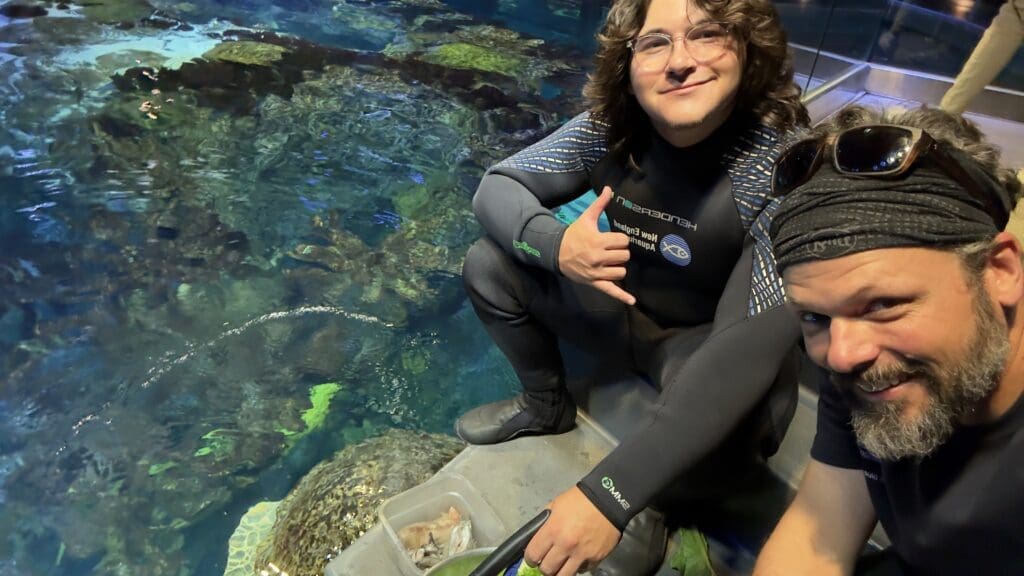
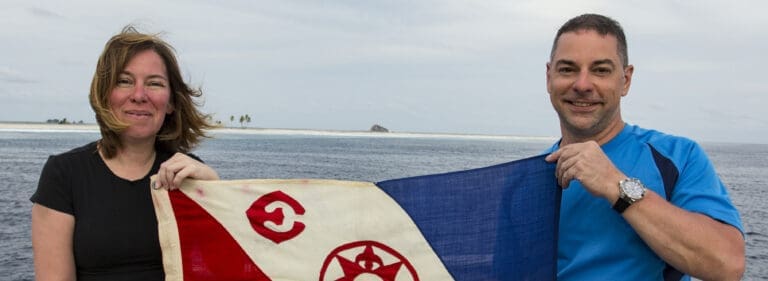
After the human lunch break was over we returned to feed the animals. The dive team had to do maintenance on the vacuum system so we went out to the platform to do a regular animal feed. Another volunteer was helping distract Myrtle while I fed the barracuda and other fish. The barracuda is fed separately so the aquarists know that it is getting all the food and vitamins it needs. They feed the other fish by throwing out “Chop” which is essentially just all the different fish chopped up into small pieces and scattered along the surface of the water. This was a great opportunity to interact with guests of the aquarium and answer any questions they had to the best of my ability. After the divers were safely out of the water we then suited up for my dive. Chris Bauernfeind, the manager of the Giant Ocean Tank, would be my dive master. After receiving a safety briefing we got ready to enter the tank. There’s no giant strides here – so slowly entering the water to not disturb the animals is important. We first made our way around the tank and then to the bottom where we got our picture taken with the Boston Sea Rovers Internship Flag! While deploying the flag I had a Loggerhead turtle named Retread land on my head! He even tried to take off with my regulator! Then we came back up to the surface to collect my camera and made our way throughout the tank. Chris pointed out various animals to me as we swam, there was the moray eel, a nurse shark and a handful of rays swimming around. Everywhere you looked there were beautiful animals to behold. A huge thank you to Chris for providing the opportunity to dive in the Giant Ocean Tank! He was a fantastic dive master and I was really fortunate to be able to do something so cool through this internship.

Tuesday: Exhibits
Working with exhibits meant seeing the behind the scenes of the entire aquarium. For the first half of the morning, I shadowed an aquarist who overlooked all the exhibits on the second floor of the aquarium. This included freshwater fish like the Gar (which all had names starting with “gar” such as garbanzo bean) and saltwater exhibits with Leafy sea dragons (which I must add might have to take the cake for the most beautiful animal I have ever seen). Since they are a part of the breeding program they have been moved into a back of the house holding tank. They are delicate and leafy and remind me a lot of sea kelp. After an initial tour we then began work on food prep. This consisted of chopping various fish, and adding in krill and vitamin supplements. The different feeds need to be stored in separate containers and bins so as to not risk any contamination between exhibits.
Each new animal that is added to a tank needs to go through a 1-3 month quarantine process where the type of animal and known parasites or issues dictate the length of quarantine. The New England Aquarium works diligently to protect all species under their care, I would learn more about this on Thursday when I worked with the Animal Health Department. There are dozens of different fish that receive specific feeds for their weight and specific dietary needs. All of these factors need to be taken into account to ensure that the animals are receiving the highest quality care the aquarium can provide. We then began the feeding process. It was surprising to learn that a lot of the fish had their own personalities, with some being described as “food motivated bullies (FMB’s for short)” they commonly steal food from other animals, typically utilizing their oversized stature to muscle food from other animals. There were also fish who like to be alone and standoffish towards other fish, only eating a few times a week. The aquarium has done its due diligence of giving regular check ups to these fish and attribute the odd characteristics to personality traits rather than any medical issue.
After the human lunch break I was given a tour of the entire behind the scenes of the aquarium. You would not believe the amount of thought that has gone into keeping these animals alive and happy. It’s really incredible to see such a well organized team take on the challenges of aquatic life. They have many different automated life support systems that can monitor the dissolved oxygen content, temperature, pH, salinity and more. The systems they have in place can administer chemicals to balance each exhibit to a predetermined setpoint. Essentially if the exhibit is too cold, it adds more warm water, too hot? It adds cold water. It was a really neat system to be able to see in action. My time with the exhibits team was incredibly informative and I’m really glad I was able to get the opportunity to shadow them.
Wednesday: Pinnipeds
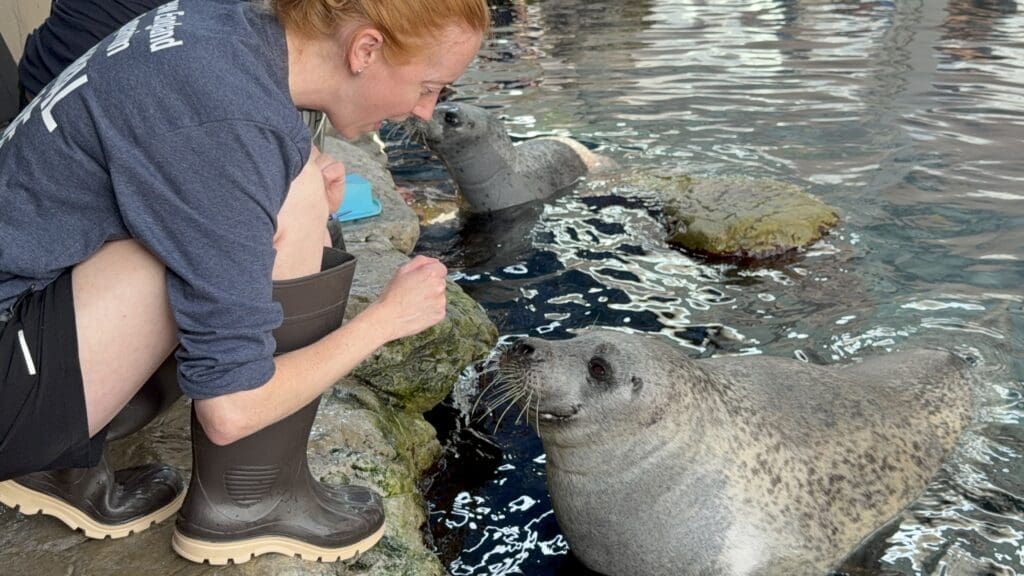
Wednesday was pinniped day, and I knew this was going to be a memorable one. Being mammals, the two pinnipeds (seals and sea lions) exhibits located at the front and rear of the aquarium attract a lot of attention. Far before the aquarium opens, it is common to see people stop on their morning walk to work for a visit with the Harbor and Gray seals in the front of the aquarium. Every morning I walked in there were typically 5-10 people from all different walks of life who all paused their morning to appreciate wildlife. It was here that I began to form an understanding of aquariums. Most of the people who visit the aquarium may not ever dive, let alone dive with these animals in the wild. If it wasn’t for the New England Aquarium, young kids would struggle to wonder about our oceans. This experience has shown me that aquariums are one of the best ways to get people involved in conservation. Due to marine protection laws, and me not being certified to handle these animals, I was unable to participate in a lot of the tasks I assisted with in other departments. With that saidm I was still able to observe and learn a ton from the incredibly knowledgeable Pinniped Team.
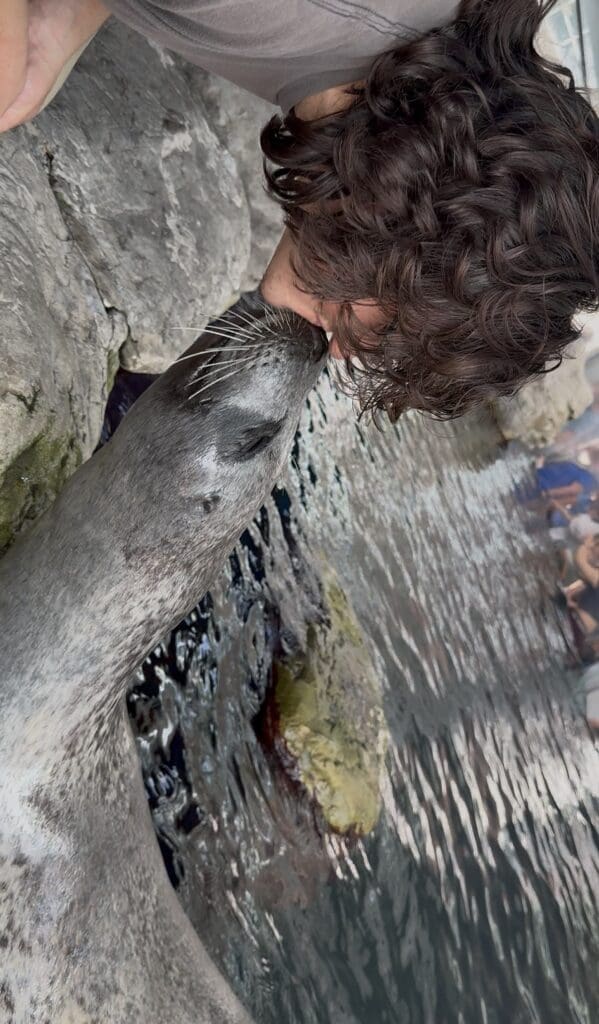
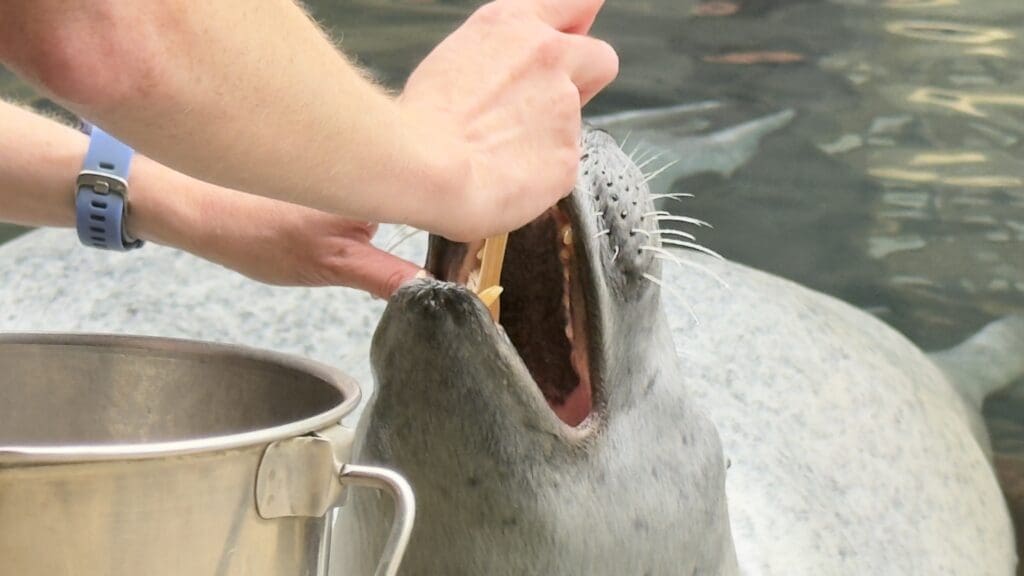
I started off by observing the team feeding the seal lions. As I had not gotten the opportunity to watch a sea lion show prior to this I didn’t fully know what to expect. I was blown away when I saw how incredibly well trained these animals were. If I could get my dog to roll over I would be proud. The animal trainers have trained the seal lions to balance a ball using their whiskers (which they can control individually with muscles called vibrissae), they can do a flip out of the water, and can raise their hand when asked “Who here is a rescue?” These animals are without a doubt intelligent and it’s wildly impressive to see them interact with their trainers and the audience. I then joined a harbor/gray seal feed. This one I really enjoyed because I had been diving with seals before and I know them to be incredibly playful and curious creatures. They were the same at the aquarium! I got to salute a seal (not the navy kind) and observe the seals getting their teeth brushed.
Thursday:
My time in the Animal Health Department was a fantastic way to bring together many of the things I had learned from other departments throughout my time at the New England Aquarium. It gave me a much better understanding of the medical care, monitoring, and overall welfare that goes into caring for the animals at the New England Aquarium. I was first given a tour of the facilities and the resources available to the Animal Health Department. They have an X-ray machine, an oxygen chamber that can provide animals with pure oxygen when needed, and a fully equipped surgery suite. The department is also supported by outside specialists who can be called upon when an animal requires care beyond the aquarium’s in-house capabilities. One example of the department’s specialized care is the treatment of the seals and harbor seals as they age. Some have required eye procedures similar to LASIK to address age-related vision problems. Seeing the range of equipment and expertise available made it clear how prepared the department is to handle these kinds of situations. Our first task of the day was to perform an annual physical examination on a penguin. We met in the examination room, which reminded me a lot of the physical I would get, just with a whole lot more people in the room. The staff listened to the penguin’s heart, examined its body, and checked for any signs of potential problems. After the initial examination, the penguin was brought to the X-ray area for further evaluation. The Animal Health Department has staff members specifically trained and certified to operate the X-ray equipment. They wear protective lead aprons and radiation detectors to monitor their exposure while taking the images. X-rays allow the team to look for foreign objects, bone abnormalities, or other internal issues that may not be visible during a physical examination. Because many of the animals at the New England Aquarium are rescues, some arrive with pre-existing conditions, including bone deformities and other health issues. Having access to this equipment and expertise allows the Animal Health Department to properly diagnose and manage these problems. Later in the day, several departments decided to have lunch outside, and the Animal Health Department was kind enough to let me join them. It was a nice opportunity to spend time with the staff outside of the work environment and gave me another chance to see the strong sense of teamwork and community that exists throughout the aquarium.
Saturday:
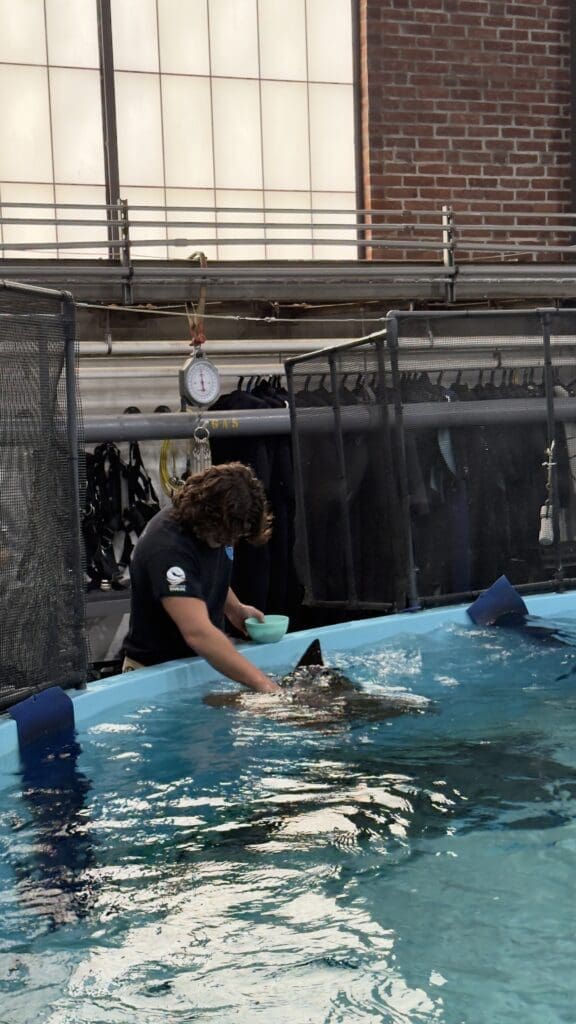
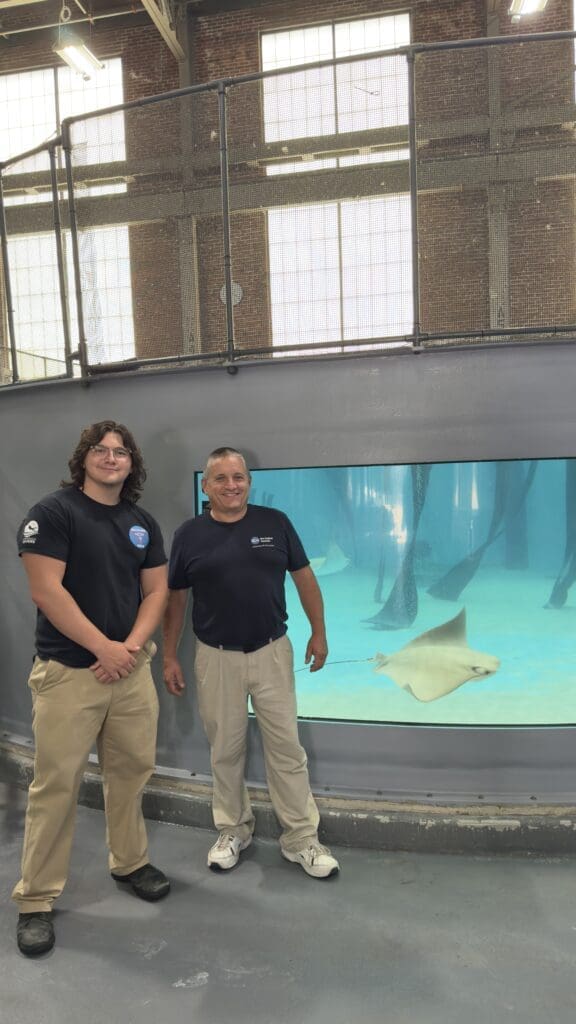
My last day with the New England Aquarium was spent at the off-site Quincy facility. The animal husbandry and animal rehab facilities are both housed here. The largest tank placed in the middle of the facility houses their cownose rays, these adorable guys are mainly here for geriatric care with the oldest member being 27 years old! Here I met up with Dan Dolan, he and his wife Dawn have been long time friends of the Sea Rovers. Dan originally worked with the Giant Ocean Tank but has shifted over to helping out in the Quincy facility in recent years. He gave me a tour of the facility. The warehouse that the rescue and animal husbandry facility now resides in was originally used to manufacture ships in World War II. In some places you can still see tracks or rails that they would pull gantries on. It was a neat factoid for a history nerd like me. The husbandry department has many animals in their care that are either on medical watch or ones that are trying to be bred for offspring. After the initial tour it was time to get to work. I started off by assisting in feeding the cownose rays, they were fed squid and fish “chop” with some vitamins mixed in. I held my hand with the food about six inches under water and a cownose ray came right up and it was the most bizarre feeling. It was like a slimy muscly mass was vacuuming my hand. After feeding other animals, I switched over to working with the turtle rehab team. They were overlooking 12 turtles while I was there. The rehab team typically receives turtles that have been coldstuned, shipstriked or other issues. During winter they can get up to 500 turtles in their facility. The green sea turtles follow the warm water up to the Gulf of Maine and when the waters begin to turn cold they work their way down south to Florida. Turtles can get stuck on the arm of the cape during this migration. When they get stuck in the arm of the cape the cold causes them to become unconscious and wash ashore. The New England aquarium works with the Mass Audubon Wellfleet Bay Wildlife Sanctuary to rescue and treat animals in distress. Green sea turtles that have been cold stunned can be especially hard to treat. Often when washing ashore their heartbeats can be as low as 1 beat every 5 minutes. Treatment for these animals can take anywhere from a few months to a few years until the animal is healthy enough to be released into the ocean. After my time with the turtle team, I headed back over to the animal husbandry side. We did a second round of feeding and then worked on cleaning up for the day. While my time with the New England Aquarium is over, I am so incredibly thankful for all that I have learned and the people who I got to work with. Aquariums like the NEAQ are fantastic institutions that celebrate our blue world and I hope to do more work with them in the future!
Recap
I really can’t thank Dan and Dawn Dolan enough for putting together a fantastic week. It’s because of people who care about the future of both the NEAQ and the Boston Sea Rovers that make this internship so fantastic. I’ve learned so much from each of the departments and I’ve got a much better understanding of what goes into keeping an aquarium functioning at top notch. If you haven’t already, I encourage you to get up on a rainy day and head to the New England Aquarium, watch the harbor seals dance, watch the fish swim, and enjoy a window into the world that surrounds us.