A Day with Shoreline Diving
I recently had the opportunity to spend a day with Rick Simon — Boston Sea Rovers Black Badge member, former intern, and now owner of Shoreline Diving. It was a chance to step into the world of commercial diving and see firsthand what the job actually looks like below the surface, away from the reefs and wrecks of recreational diving and into the infrastructure that keeps entire communities running.
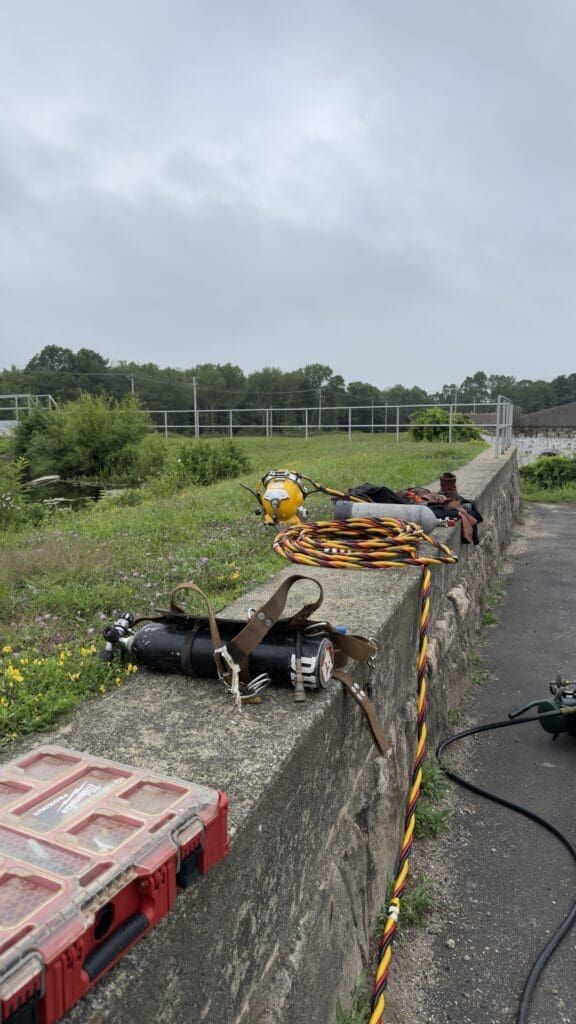
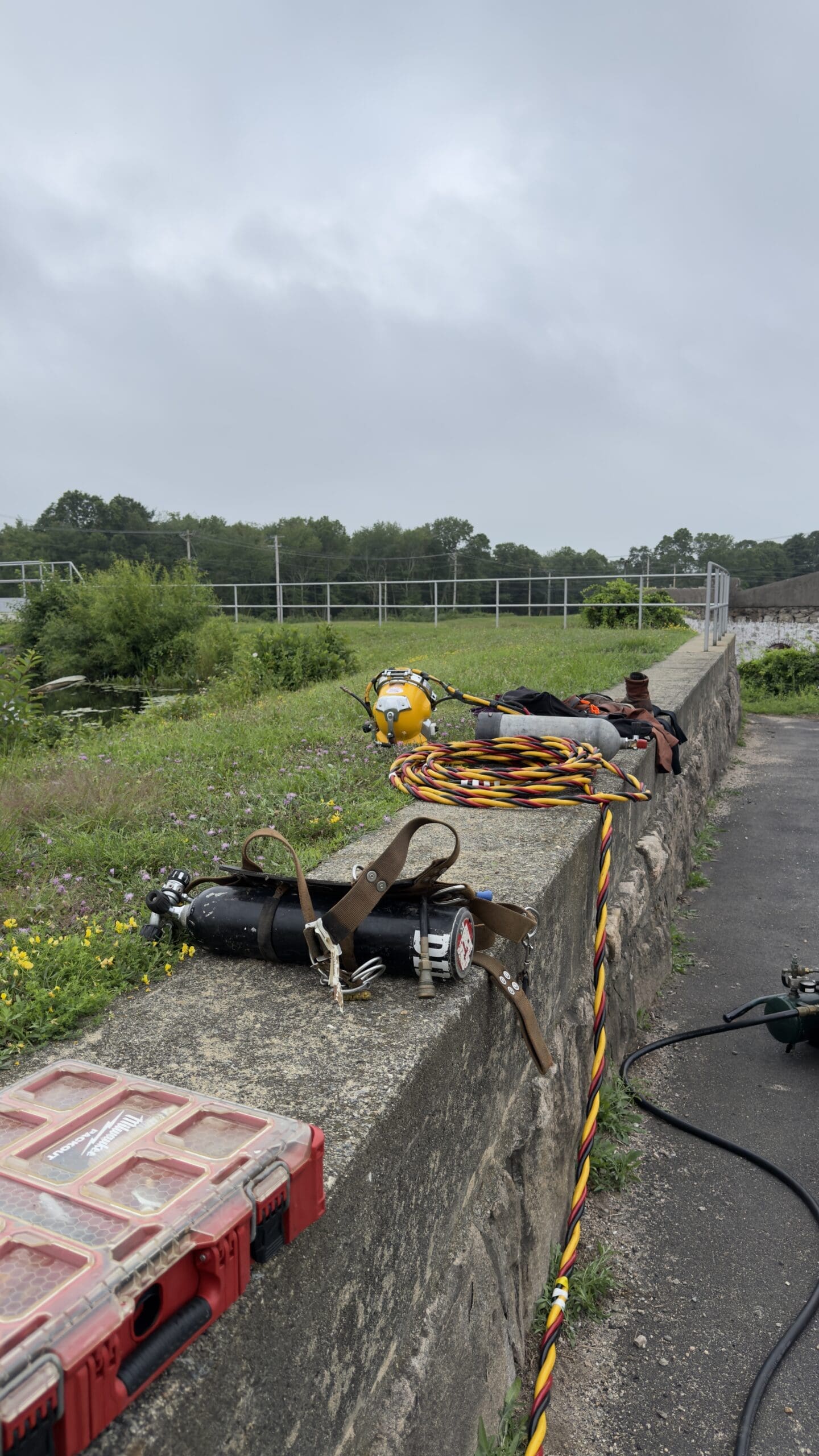
Rick started by introducing me to hard-hat diving operations. The first stop was a water reservoir, where the Shoreline Diving team was inspecting a net designed to stop large debris from entering an inflow pipe. There was no room for a leisurely pace here: the pumps could only be shut down for five minutes at a time, so the diver had to descend, assess the net, clear any obstructions, and surface — all within that narrow window.
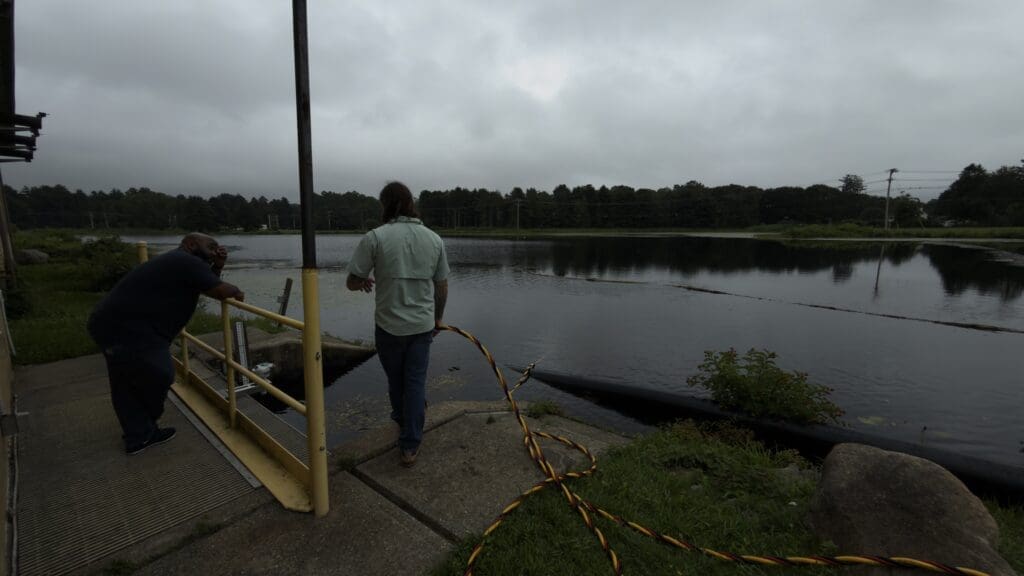
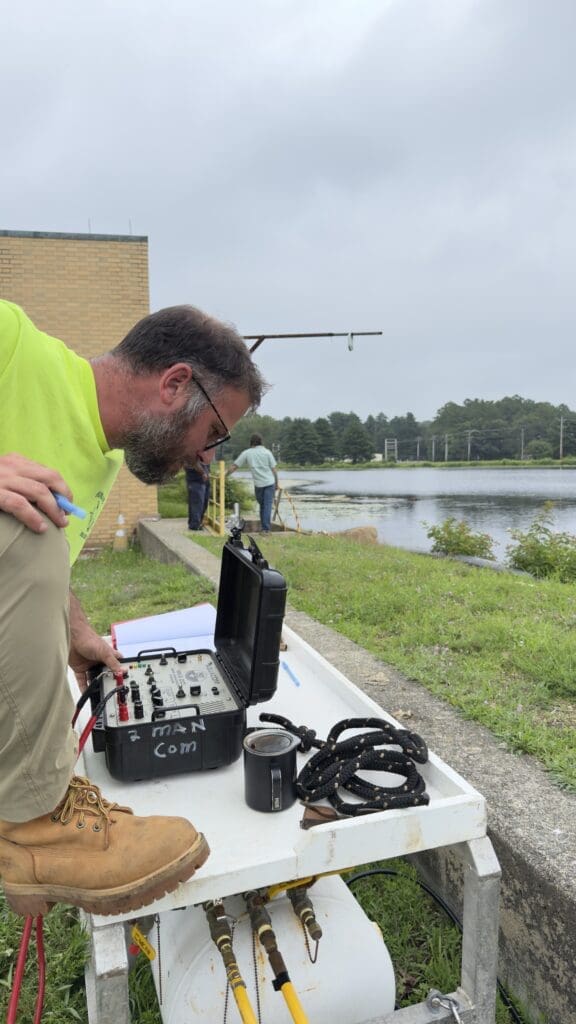
Watching the team communicate, time the shutdown, and execute the inspection with that kind of precision was eye-opening. Every second counted, and there was no margin for hesitation or wasted movement.
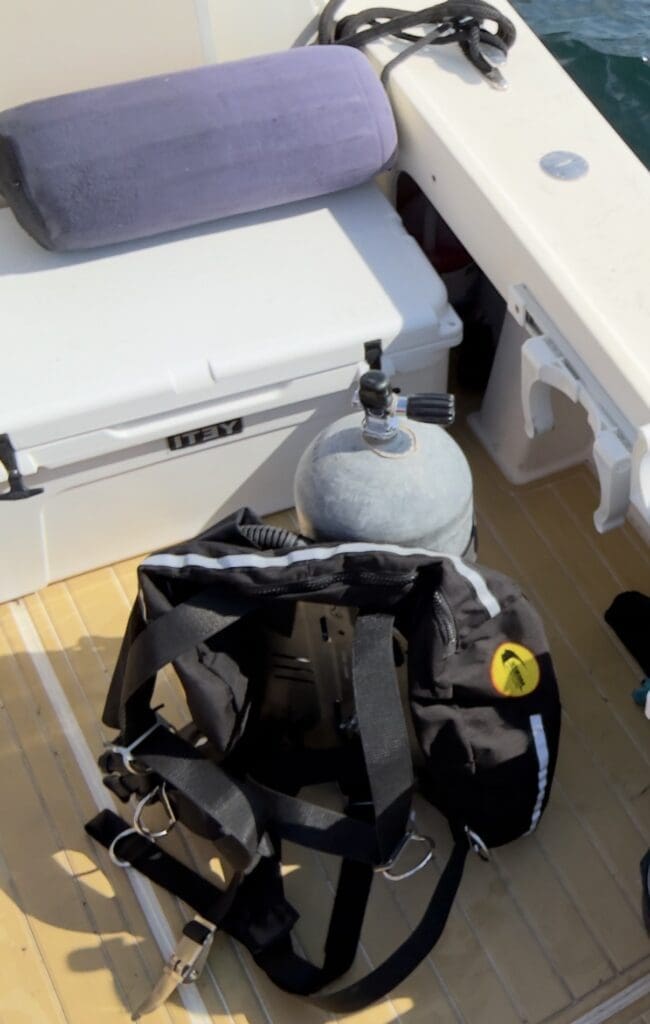
There’s an added weight to the work when you realize that a missed piece of debris or an unnoticed blockage isn’t just an inconvenience; it can affect a water supply that thousands of people depend on. From the reservoir, we moved on to an inspection at a sewage treatment plant. Here the parking lot had formed a small sink hole due to a caving cement support. It was small, maybe 8-12 inches across but 7-8 feet of the parking lot was sinking down. There’s many different factors that can go into a problem like this. The type of tools they can use narrows significantly because they are so close to settling tanks. Power tools would vibrate and disrupt the settling for sewage treatment. If there were something wrong with the plant it could send sewage into the local harbor, which would in turn cause eutrophication and a massive fish kill. Other considerations were seeing where property lines fall because it borders a state park. Maps have to be checked to see who really owns that land and who is on the hook for paying for the work to fix it. Afterward, Rick brought me back to the shop, where we built a backplate and wing setup together. That single afternoon changed the way I dive. My buoyancy control, which I’d always thought was decent, improved almost overnight. Trim that used to take conscious effort now feels natural — like I’m gliding, perfectly level, calm and controlled underwater. As I put it at the time, it feels like being a coffee table underwater: stable, balanced, and completely in trim. I’m incredibly grateful to Rick and to Shoreline Diving for the time, the knowledge, and the hands-on guidance they offered me that day. Experiences like this one are exactly how divers grow — not just in skill, but in understanding the craft, the discipline, and the real-world stakes behind the sport. It’s a day I won’t forget, one that gave me a new appreciation for the work commercial divers do out of sight and underwater, and one that has already made me a better diver.